
Home / Services / Container & Metal Buildings
Residential & Commercial
Shipping Container and Metal Building Insulation
Steel buildings have an insulation problem wood never has: the entire shell conducts heat, and warm interior air meeting cold steel means condensation, rust, drips and mold.
Containers Turned Offices, Shops and Homes
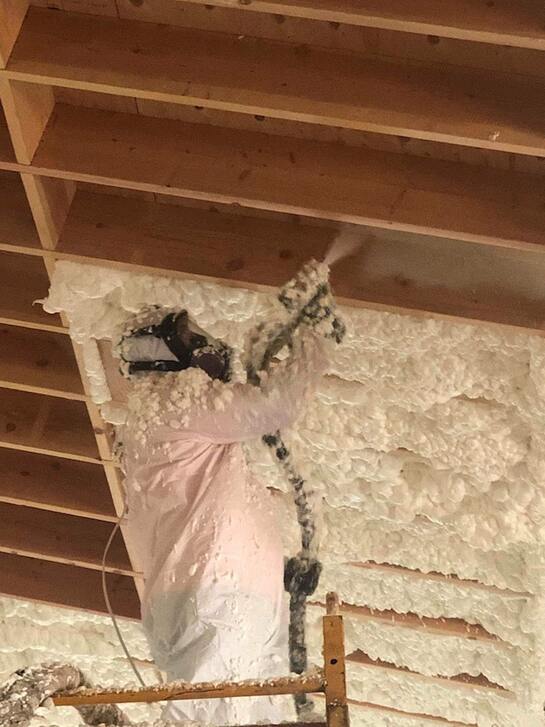
A container conversion lives or dies on its insulation. Closed-cell foam is the right system here: it adds rigidity, needs little depth to reach a usable R-value, and its moisture barrier protects the steel it touches. We spray the walls and ceiling as one continuous envelope, so the finished space stays dry and comfortable year-round.
Barns, Warehouses and Steel Shops
For larger metal buildings the goals are the same at bigger scale: condensation control, temperature stability and lower heating costs. We insulate roofs and walls of agricultural and commercial steel buildings across the Hamilton area. Wondering what your structure would cost? See what drives spray foam cost or call (289) 212-0143 for a free estimate.
Why a Container Is a Hard Building to Insulate
A shipping container is a sealed steel box with almost no cavity depth and a surface that tracks the outside temperature almost instantly. Conventional framing-and-batt approaches eat the little interior space there is and leave thermal bridges at every rib. Closed cell foam applied directly to the steel insulates and air seals in one pass, follows the corrugation, and takes up far less internal width doing it.
Condensation Is the Whole Problem
The reason containers sweat is that warm interior air meets steel sitting at the outside temperature and gives up its moisture on contact. In a lake-effect climate that happens for much of the year. Closed cell foam at thickness is a vapour retarder as well as insulation, so it stops the air reaching the cold surface rather than trying to manage the water afterwards.
Offices, Storage and Workshops
What the container is used for changes the specification. Storage that simply must stay dry is a different thickness from an office somebody sits in all day. The written scope should name the thickness and which surfaces are covered, including whether the doors and the floor are part of the job, because those are the parts most often left out.
Questions
Common questions
Do you work around business hours?
Yes. Commercial work is staged in zones and scheduled so your operation keeps running.
Why closed-cell foam on steel buildings?
It bonds directly to metal, resists moisture, and stops the condensation that drips from cold steel.
Do you serve commercial properties across Hamilton?
Yes, commercial and industrial buildings across the Hamilton area get the same crews and process as our residential work.
Want to know what your project would cost?
Tell us about the property and we'll help you determine the next step.
Free written estimates • No obligation • Local team